For those suffering from back or neck pain, and for those who would like to avoid them, here are some useful tips from our clinics.
Back pain and neck pain are warning signs.
Do not ignore them
Do not get trapped into thinking that they will go away.
Do not rely on painkillers
Very importantly, do not persist in taking pain-relieving medication in the long term.
Sit on a firm but cushioned chair to support your back. Avoid soft chairs and deep couches, and choose a chair with a good backrest. Do not sit for long periods: it can increase the pressure in the lumbar discs of your spine six times more than lying down. Try to get up every 30 minutes for a mini-break.
When you need to stand for a long time, place your foot on a small book or a rail, as you often find in a bar, and keep changing every 5 to 10 minutes. When shopping, it is often more painful to amble. Move purposefully to your destination and swing your arms like a gentle march.
Do not use heat in the early acute stage. Heat may temporarily ease the discomfort, but it may prolong your recovery. Use a cold pack to reduce inflammation. Wrap it in a tea towel and place it over the sore area for 10 minutes, remove it for 10 minutes, then put it back for 10 minutes. Wait an hour and repeat.
Open each tip to read more.
Your head leads your body. Try to align your head in the proper position: gently tuck your chin and lengthen the back of your neck. Check your shoes or trainers. If they are worn out, your feet over-pronate, which increases stress through your knees, hips and consequently your back and neck. If you have over-pronated feet, you may need orthotics or insoles to support the arches of your feet.
Check that your working environment is suitable for your size and needs, and that it can be adjusted from sitting to standing and back. As you take mini-breaks from your desk, open your chest and pull your shoulders down and backward (external rotation) after positioning your head, to decrease the tension in your upper back and neck. A sitting-standing desk will encourage you to change posture and minimise congestion and pressure.
Take deep breaths at regular intervals every day, involving your diaphragm and relaxing your neck muscles. Imagine yourself in good posture and the muscles of your back will move more regularly. If it is not painful, clench your buttocks and pull your deep abdominal muscles inwards as you breathe out.
If it is not painful, turn your torso and head gently in both directions at regular intervals during the day, with deep breathing. Gently stretch your groin and hip flexor muscles in a standing position to minimise stiffness around your lower and mid-back before you sit at your desk again. When in pain, stop all sports, even swimming, and try to control the inflammation naturally first.
Drink plenty of water during the day (6 to 8 glasses, depending on your activities) and eat a balanced diet. Your mind and body need good fluids, vitamins, minerals and nutrients to function properly.
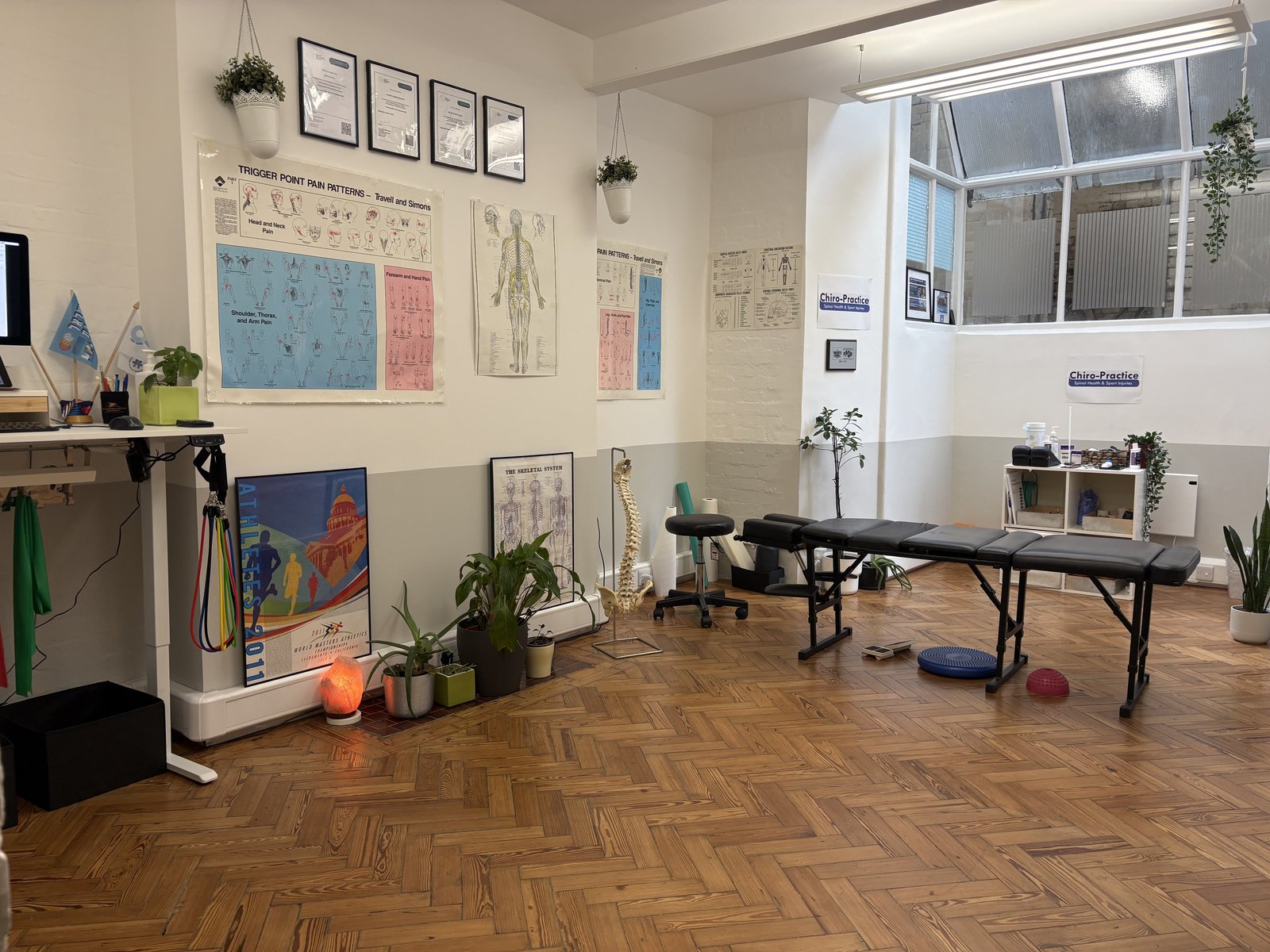
A video from our City of London clinic.
A video from our City of London clinic.
Are you ready for the gardening season?
Do not delay chiropractic treatment if you are not improving after a few days of following this advice. Early wear and tear changes can take place rapidly in an injured or immobilised joint after the first few weeks of the onset of pain.